Please allow us to collect data about how you use our website. We will use it to improve our website, make your browsing experience and our business decisions better. Learn more Learn More
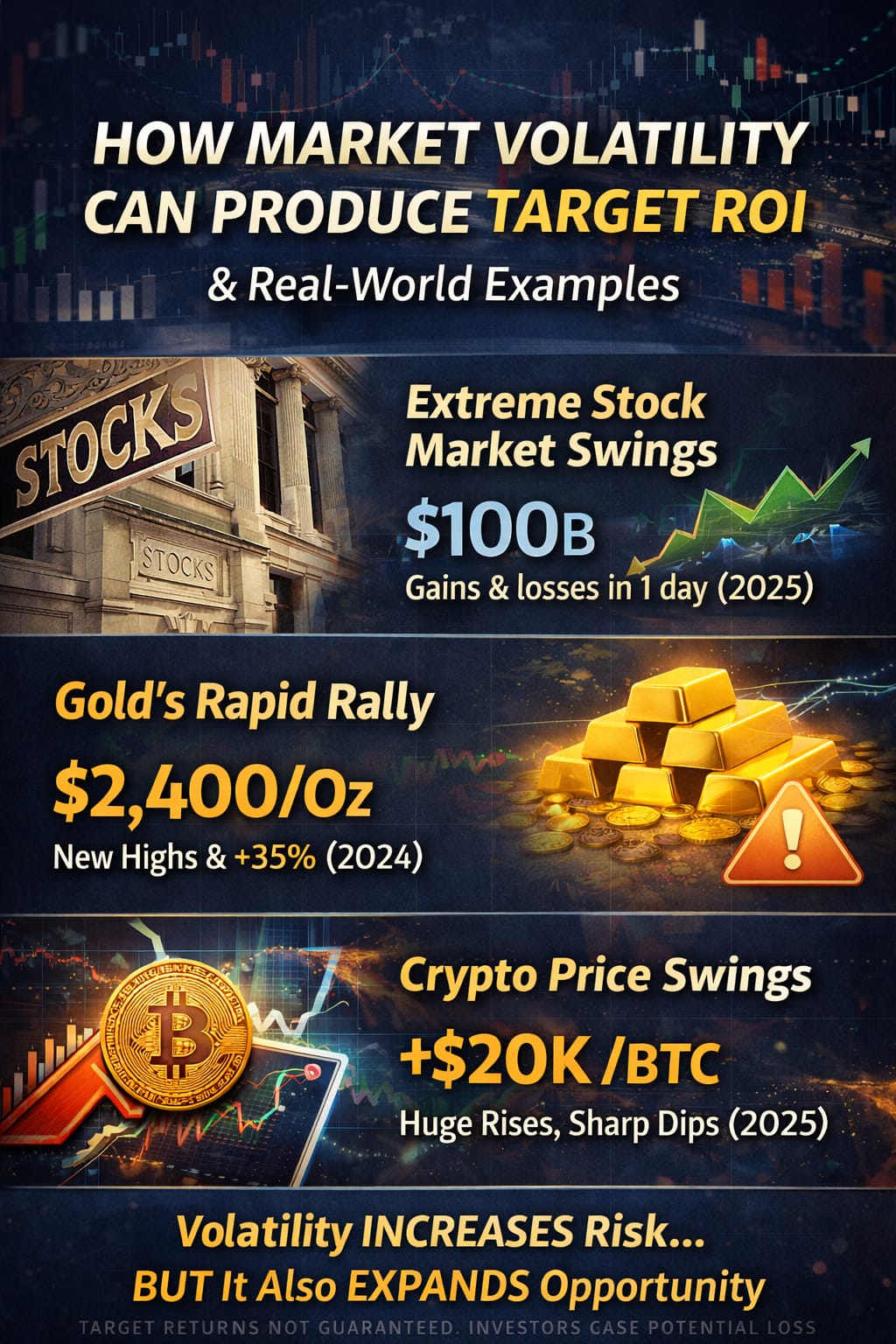
How Market Volatility Can Produce Target ROI — With Real-World Examples
One of the most common concerns among investors and reviewers is whether high target ROI figures like those shown on Aitonvest are possible in real markets. To clear the air, it’s important to explain how volatility drives opportunity — and to show that volatile market environments have historically produced substantial price moves that skilled strategies can potentially capitalize on.
Below are real market examples where volatility created significant price movements in assets such as equities, commodities, and cryptocurrencies.
📊 Example 1 — Extreme Stock Market Swings
In 2025, Wall Street experienced historic intraday price swings where individual mega-cap stocks gained or lost more than $100 billion in market value in a single day, a level of movement not seen before. These sharp swings were driven by algorithmic trading, leveraged ETFs, and rapid changes in investor sentiment. Such intense volatility events provide opportunities for active strategies to capture short-term gains or execute disciplined rebalancing that would not be available in calm markets.
Lesson for ROI: Higher short-term volatility often correlates with wider price dispersion — and where there is dispersion, trading strategies can generate differential returns.
📈 Example 2 — Gold’s Rapid Rally
Ahead of the 2024 U.S. election and amid geopolitical uncertainties, gold futures surged to record highs, with year-to-date gains of around 35% and extended safe-haven buying. Commodities like gold historically attract capital during risk-off periods, creating both upside and downside volatility.
Lesson for ROI: When major macro events trigger volatility across markets, assets like gold can exhibit larger directional moves, providing the environment where sophisticated strategies might have historically realized above-average returns relative to stable market periods.
📉 Example 3 — Cryptocurrencies and Sudden Price Swings
In 2025, Bitcoin’s price climbed to historic highs and then exhibited rapid pullbacks, reflecting how crypto assets remain among the most volatile financial instruments. Large upward moves followed regulatory news and institutional ETF adoption, while sharp corrections reflected market sentiment shifts.
Lesson for ROI: Significant volatility in crypto markets both creates risk and opens up the possibility of outsized short-term gains when strategies anticipate or react to market shifts.
📌 Why Volatility Matters for Target Returns
All of these examples share a common theme: volatility expands price ranges, opening more potential entry and exit opportunities than calm, sideways markets.
In financial markets:
- Volatility means prices move further and faster than normal.
- Traders and systematic strategies can execute higher-frequency or momentum-based positions.
- Safe-haven assets (like gold) can spike quickly when risk sentiment changes.
It’s the breadth and speed of these movements that enable higher target returns in active strategies — not a promise of profit, but a driven opportunity set that did not exist in stable conditions.
📌 Aitonvest’s Target ROI in Context
Aitonvest explicitly labels plans with associated risk/volatility levels, from stable to highly volatile. These labels reflect a core principle in financial markets: higher potential returns are associated with higher risk and greater price dispersion.
This aligns with how professional traders and managed funds operate:
- Plans tied to lower volatility goals de-emphasize rapid price moves.
- Plans tied to higher volatility target bigger short-term movements — the same phenomenon seen in the real-world examples above.
At no point does volatility guarantee profit. What it can do is expand the range of possible outcomes. Platforms that list target returns typically project outcomes based on historical backtests over volatile and stable regimes, not assured daily income.
Final Clarification
Target ROI figures are projections, not guarantees.
They reflect scenarios in which strategies perform well in volatile environments, as illustrated by real market events.
Investors should understand that volatility cuts both ways — while it can enable higher potential gains, it also carries risk of loss, and outcomes may differ materially from targets.